Injectables
Botox (Botulinum) in Leipzig
Targeted muscle relaxation for expression lines
Botulinum toxin type A selectively relaxes the facial muscles to smooth expression lines – also used for migraine, hyperhidrosis and facial contouring.
- Onset
- after 48–72 hours
- Peak effect
- after 1–2 weeks
- Duration
- usually 4–6 months
- 1 zone (frown lines, crow’s feet or forehead lines) €180
- 2 zones €300
Botox without an appointment: Tue–Fri 11 am–7 pm
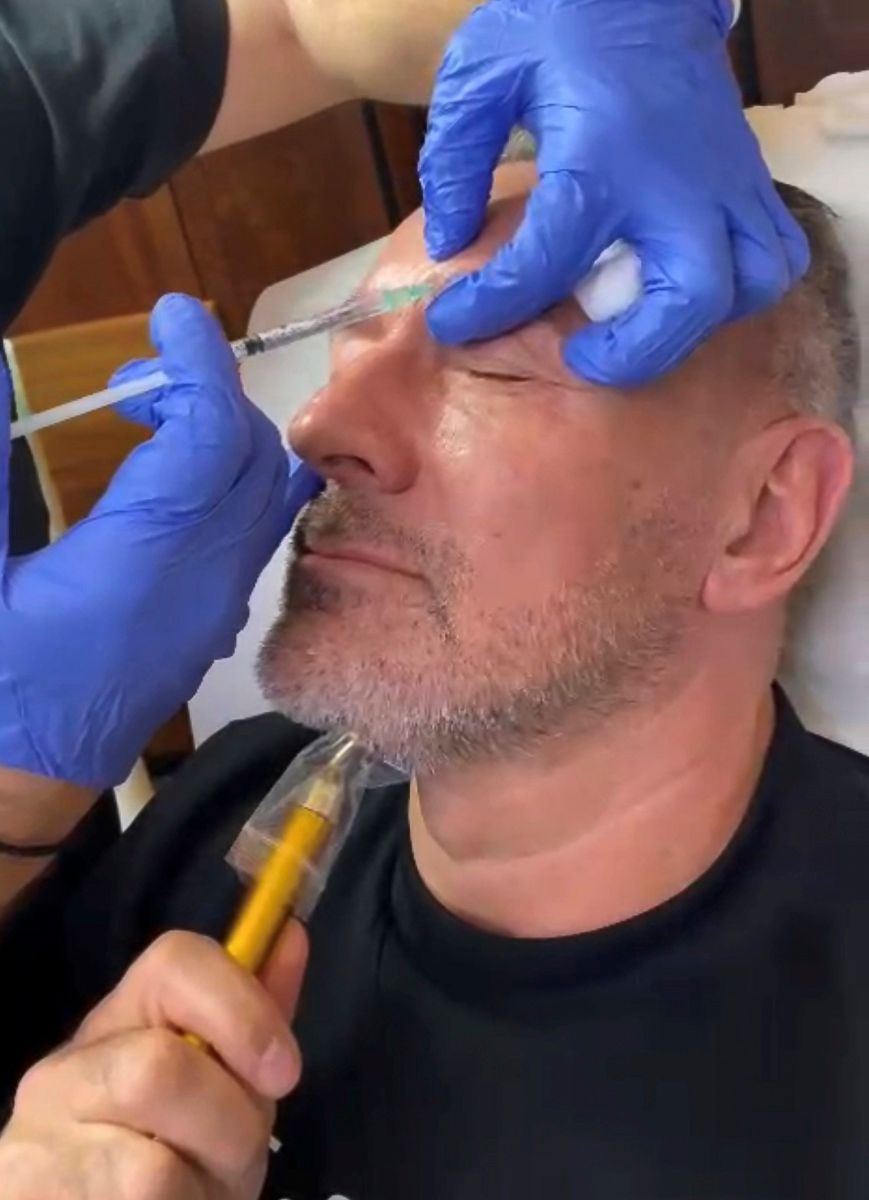
Procedure, effects & risks
What is botulinum?
Botulinum toxin type A – better known as Botox – is a protein obtained from the bacterium Clostridium botulinum. The name botulinum toxin dates back to 1820, when the country doctor Justinus Kerner first spoke of “sausage poison” (Latin botulus = sausage, toxin = poison). Science currently recognises seven variants of botulinum toxin, the so-called serotypes A, B, C, D, E, F and G.
In medicine, it is mainly biotechnologically produced botulinum toxin type A that is used, as a highly effective prescription-only medicine – both for the effective and safe treatment of wrinkles and for the treatment of severe neurological movement disorders and pathological, extreme sweating of the armpits. As the second part of the original term (toxin = poison) no longer plays a role in the forms of botulinum toxin type A prepared today, we refer to it simply as botulinum.
How it works
Constant activity of the facial muscles can, over the course of a lifetime, etch wrinkles into the overlying skin – for example frown lines above the nose, forehead lines or laughter lines at the corners of the eyes (known as crow’s feet). Because botulinum reduces muscle contraction by blocking the messenger substance required for it, botulinum injections into the relevant muscles lead to dose-dependent relaxation. As a result of this muscle relaxation, the wrinkles are smoothed out or disappear completely.
Botulinum is broken down quickly after injection. Its effect lasts for a few months, depending on the amount injected and the patient. Botulinum works only temporarily: once the effect has worn off, neither the active substance nor its effects on the nerves can be detected. However, since a muscle that has been relaxed usually becomes somewhat weaker, less active substance is often needed to achieve the same muscle-relaxing effect.
Onset and duration of effect
In most cases the treatment effect begins after 48–72 hours, with the maximum effect reached after 1–2 weeks. In rare cases it may take longer for the effect to set in. The blockade at the junction between nerve and muscle usually lasts 4–6 months, after which the changes caused by botulinum have reversed. The wrinkle-smoothing result of the injection lasts for a correspondingly long time.
I. Main indications in the upper third of the face (on-label)
Botulinum toxin type A is primarily used for expression lines in the upper third of the face:
- Forehead lines: to prevent horizontal lines on the forehead, often called “worry lines”. Target muscle: M. frontalis.
- Glabellar lines (frown lines): these form where the bridge of the nose meets the forehead as a result of frequent concentration and visual strain, for example during screen work. Target muscles: Mm. corrugator, procerus, depressor supercilii.
- Periorbital lines (crow’s feet, laughter lines): creases that form at the outer corners of the eyes as a sign of declining skin elasticity. Target muscle: M. orbicularis oculi.
II. Special indications in the middle and lower third of the face (off-label)
- Perioral lines (“smoker’s lines”): the most common cause of lip lines is not excessive facial movement but fat atrophy. A combination with hyaluronic acid fillers should therefore be aimed for. Target muscle: M. orbicularis oris.
- Marionette lines (“Merkel lines”): marionette lines only rarely result from overactivity of the M. depressor anguli oris. Treatment with hyaluronic acid fillers for augmentation should therefore be considered first. Where the muscles are overactive, a combination treatment should be carried out – ideally with the botulinum treatment approximately two weeks before the filler treatment. Target muscles: M. depressor anguli oris, platysma.
- Cobblestone chin / horizontal chin crease: the aim of treatment is a better-proportioned face through relaxation of the chin muscles. Target muscle: M. mentalis.
Masseter, nose and neck (off-label)
- Masseter injection (“squared face”): the aim of treatment is to contour and slim the lower third of the face (from a “squared face” to a “slim face”). Masseter hypertrophy is often found in patients who suffer from bruxism (teeth grinding). Target muscle: M. masseter.
- Lifting the nasal tip: the aim of treatment is to straighten the nose in patients who pull their nasal tip downwards (caudally) when smiling, creating the impression of a crooked nose (“witch’s nose”). Target muscles: M. compressor narium minor, M. depressor septi nasi, M. orbicularis oris (connecting fibres to the nose).
- Narrowing a widened nose. Target muscle: M. nasalis pars alaris.
- Neck lines: the aim of treatment is to relax visible platysmal bands. Correct patient selection is crucial here: only patients with pronounced hyperkinetic platysmal bands benefit from this therapy. Patients with skin elastosis are not suitable. Target muscle: platysma.
Meso-Botox (Microbotox)
Microbotox is a technique that uses tiny droplets of botulinum to treat acne and oily skin – not only on the face but also in areas such as the chest or back. Numerous microdroplets of diluted BoNT-A are injected into the dermis or the junction between dermis and epidermis.
The aim is to reduce sweat and sebaceous gland activity and to relax the superficial muscle layer, resulting in smoother skin.
Treatment of chronic migraine
The efficacy of botulinum in chronic migraine has been demonstrated: the substance can reduce the frequency and severity of attacks. During the Botox treatment, injections are given with a fine needle at a total of 31 sites on the forehead, temples, neck and shoulders.
When treating chronic migraine, the Botox injections are repeated at three-month intervals during the first year. Subsequent sessions are then tailored to the individual patient’s needs.
Hyperhidrosis (excessive sweating)
Increased, localised sweating is relatively common and usually affects the hands, feet or armpits. It often leads to limitations in everyday life, for example large sweat patches on clothing or constantly damp hands when shaking hands.
Focal treatment of the affected areas with botulinum is usually a very effective treatment option with relatively few side effects. Small doses of the medicine are applied directly under the skin in the affected areas.
III. New indications: Penis-Tox (P-Tox)
Injection treatment for penis enlargement and improved erections.
Before the “P-Shot” treatment, a so-called penile block is applied, which temporarily reduces blood flow to the penis. Botulinum toxin is then injected into the erectile tissue (corpora cavernosa) at several points. The block is intended to keep the active substance in place for longer and is removed after approx. 20 minutes.
P-Tox: effects
The effects of P-Tox include more intensive blood flow through the blood vessels, an optimised supply of nutrients to the tissue and stimulation of nerve function.
Thanks to the improved blood flow with P-Tox, erections become harder, more intense and longer-lasting. This can enhance sexual sensation and the sexual experience.
P-Tox: onset and duration
The first effects appear within the first 3 weeks after a P-Tox treatment. Blood flow increases, and the size of both the flaccid and the erect penis increases. The effect peaks after approximately 2–3 months and then gradually wears off over the following months. If desired, the P-Tox treatment can be repeated after approximately 6 months.
Barbie-Tox: relaxed muscles – elegant lines
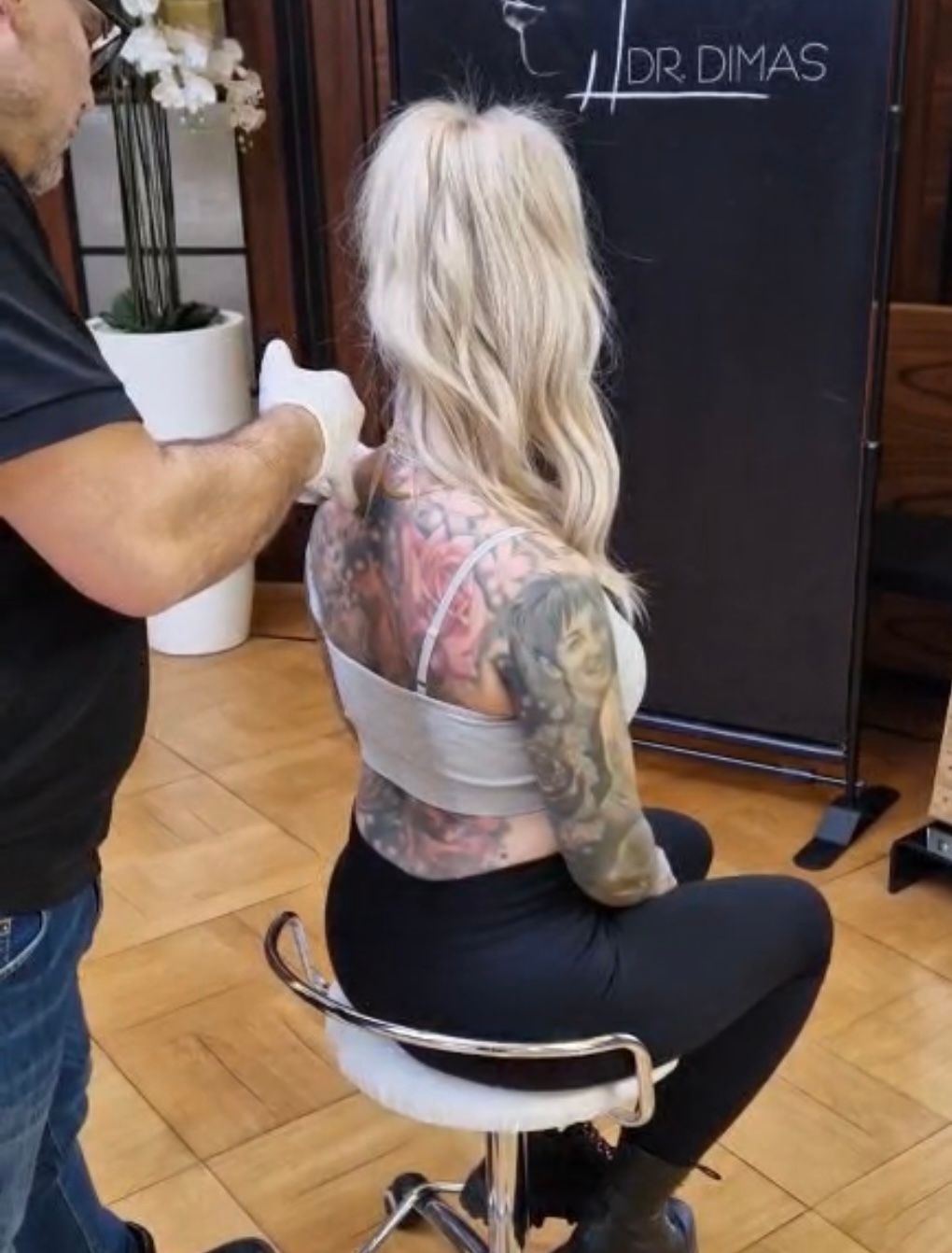
Barbie-Tox is a special application of botulinum toxin in which it is injected specifically into the muscles of the neck. These muscles, particularly the M. trapezius, tend to tense up under stress and strain, which often results in a bulky and unattractive appearance.
Injecting Botox into this area relaxes and reduces the size of the muscles, creating a slimmer, longer neckline reminiscent of the elegant silhouette of a Barbie doll.
Side effects
When performed by an experienced practitioner, botulinum injection is a very safe and well-tolerated method of gently smoothing wrinkles.
The injection may result in small bruises or swelling. Temporary malaise, tiredness or headaches have been reported. Allergic reactions, itching or skin rash occur extremely rarely. Also extremely rare are unpleasant complications such as temporary drooping of the eyebrow or upper eyelid, or short-term visual disturbances. Correct performance of the treatment rules out such risks.
All side effects – like the effect of botulinum itself – are temporary.
Risk of poisoning (botulism)
Botulinum toxin is a very potent and therefore potentially dangerous toxin. As with all substances, however, poisoning depends on the route of administration and the dose. The clinical picture of botulinum toxin poisoning, known as botulism, is observed when larger amounts enter the body (for example, in food poisoning).
Because in aesthetic use only tiny, 100,000-fold diluted amounts are injected into defined muscle areas and are bound there locally (i.e. they do not enter the bloodstream or the body as a whole), poisoning cannot occur in this setting.
Contraindications
For safety reasons, use during pregnancy and breastfeeding is not recommended. Patients with known underlying conditions associated with muscle weakness (for example myasthenia gravis) or with blood clotting disorders should also not be treated with botulinum.
This information does not replace medical advice. Whether a treatment is suitable for you is clarified in a personal consultation at the Villa Hupfeld.
Insights
Barbie-Tox: injection into the trapezius muscle
Often combined with
Treatments →
Dermal Filler Therapy
Precise injections of hyaluronic acid and biostimulators to smooth wrinkles, restore lost volume and shape the lips, cheeks and nose.
from €250

Thread Lift
Absorbable threads, placed under local anaesthesia, lift sagging tissue and stimulate collagen – bridging the gap between injectables and a surgical facelift.
from €600
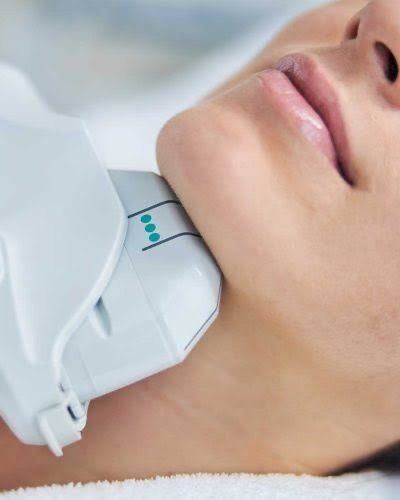
Ultherapy HIFU
Focused ultrasound reaches down to the SMAS layer, stimulates new collagen and tightens the face, neck, décolletage and body areas – without a scalpel.
from €400
Appointments
Your next step: a personal consultation.
Every treatment begins with a consultation at the Villa Hupfeld. Call us, message us on WhatsApp or request your preferred appointment online.
Opening hours: Tue–Fri 11 am–7 pm
Botox without an appointment: Tue–Fri 11 am–7 pm
Simply drop in during our opening hours.
Not sure yet? Start the treatment finder Body Map

Medical director
Christos Dimas
Specialist in orthopaedics and trauma surgery · aesthetic medicine since 2018
Member of DGBT and ISAC
Meet the team →